
The Best eSIM for Travel in 2025: My Honest Picks for Every Trip
You land in Tokyo, and instead of hunting for a local SIM, you activate a travel eSIM from your phone. That is the best eSIM for travel: a digital profile you buy and install instantly before departure, giving you immediate data without swapping physical cards. It offers seamless connectivity across multiple countries, saves you roaming fees, and lets you manage plans through a simple app. Just scan a QR code or download the profile, and you are online the moment you touch down.
Top-Rated Global Data Cards for Jet-Setters
For jet-setters, the best eSIM for travel is often a top-rated global data card like Airalo or Holafly, offering instant activation across multiple countries without physical SIM swaps. These services provide flexible data packages, with Airalo excelling in pay-as-you-go plans for frequent short trips, while Holafly stands out with unlimited data options ideal for heavy users. Key features include regional plans covering continents like Europe or Asia and local carrier partnerships ensuring reliable 4G/5G speeds. The primary advantage is avoiding roaming fees while maintaining a single eSIM profile for all destinations. Choose based on your data consumption and trip duration to maximize connectivity.
Why a Digital SIM Beats Traditional Roaming
When comparing a digital SIM to traditional roaming for global travel, the core advantage is instant local connectivity without carrier lock-in. Instead of paying daily roaming fees or swapping physical cards, you install a single eSIM profile before departure. The process follows a clear sequence:
- Purchase a data plan from an eSIM provider like Airalo or Holafly.
- Scan a QR code or download the profile to your device.
- Activate the plan upon arrival, automatically connecting to a local network.
This eliminates surprise bills and the need to find a store for a SIM, making data costs predictable and connectivity seamless across borders.
How eSIMs Keep You Connected Without Physical Swaps
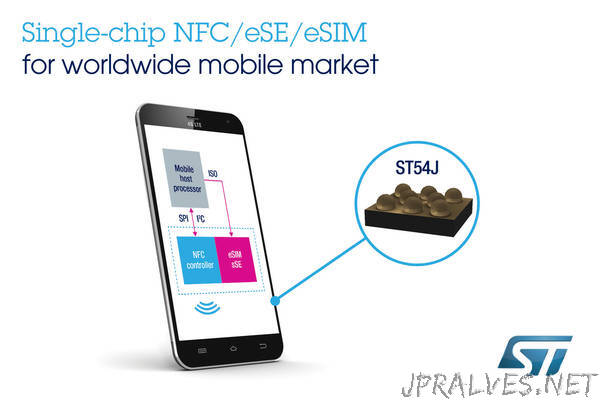
eSIMs eliminate the need to physically swap SIM cards when crossing borders. Instead of hunting for a local SIM vendor, you scan a QR code or download a profile to activate a new data plan instantly on your existing device. This allows you to switch between networks or top up data mid-trip without visiting a store. Instant network activation means you stay connected from arrival, without downtime or the risk of losing your primary SIM.
- Download a local data plan before you land, and activate it with a single tap.
- Store multiple eSIM profiles on one device and toggle between them for different countries.
- Keep your home number active for calls or 2FA while using a separate eSIM for data.

Choosing the Right Plan Based on Your Travel Style
Choosing the right plan begins with identifying your data habits. For heavy streamers or remote workers, a high-data regional or global eSIM plan is essential to avoid throttling. Casual users who only check maps and messages can save money with a smaller, destination-specific data pack. Frequent short-trip travelers benefit from pay-as-you-go or 7-day plans, while a single long-term visitor should select a 30-day plan with higher total data.
Always verify the plan’s tethering policy if you share a connection from your phone.
A digital nomad hopping between countries needs a flexible multi-region plan, whereas a one-country vacationer is best served by a targeted local eSIM for the best value.
Light Data Users vs. Heavy Streamers: What Suits You
Choosing between a data-light or streaming-heavy eSIM plan depends entirely on your daily travel habits. Light data users, who mainly check maps, messages, and emails, can save money with small, regional packages (1–3 GB) from providers like Airalo or Nomad. Heavy streamers, who watch videos, join video calls, or use social media constantly, require unlimited or high-capacity plans (10+ GB) from services like Holafly or BNESIM to avoid throttling. Mismatching your usage leads to wasted funds or sudden slowdowns. Assess typical screen time and connectivity needs before committing.
Light data users thrive on cheap, small GB packs; heavy streamers need unlimited or high-capacity plans to avoid buffering and data topping up.
Regional Passes vs. Country-Specific Options
When evaluating regional passes vs. country-specific plans, base your choice on your itinerary’s geography. A regional pass covers multiple neighboring countries (e.g., Europe or Southeast Asia), offering seamless connectivity across borders without swapping eSIMs—ideal for multi-destination trips. Conversely, country-specific plans are cheaper and often provide faster local networks, best for staying in one nation. For a blend of both, a combination of one regional pass and tailored local eSIMs can optimize cost and performance. Follow this sequence:
- Map your exact route across countries.
- Choose a regional pass if crossing three or more borders.
- Pick country-specific plans for single-nation stays or cheaper data.
Pay-As-You-Go vs. Pre-Paid Bundles for Short Trips
For short trips, the choice between pay-as-you-go and pre-paid bundles hinges on data usage predictability. Pay-as-you-go offers maximum flexibility, charging only for megabytes consumed, which suits minimalist users who just need maps or messaging and want zero waste. Conversely, a pre-paid bundle provides a fixed data cap and a clear, single cost, making it superior for travelers who will use data consistently for streaming or navigation. The key insight is that pre-paid bundles offer cost predictability, while pay-as-you-go avoids paying for data you never use, directly aligning your plan with the trip’s actual digital footprint.
Leading Providers for Seamless International Roaming
For seamless international roaming, Airalo stands out by offering instant activation across 190+ countries via local networks, letting you dispense with scratched SIM cards entirely. You land in Tokyo, scan a QR code before customs, and your data flows as naturally as if you never left home. Another leading provider, Holafly, excels with unlimited data plans for Europe and Asia, ideal for streaming maps on city buses without hunting for Wi-Fi. Both eliminate surprise bills, yet choosing between them often comes down to whether you value broad country support over truly limitless daily usage.
Airalo: Wide Coverage and Flexible Pricing
Airalo stands out for its exceptional worldwide reach, offering eSIMs in over 200 countries and regions. This wide coverage for global travelers ensures you stay connected in major destinations and remote spots alike. Flexible pricing caters to every trip, with affordable local, regional, and global data plans. You avoid hefty roaming fees by choosing short-term or long-term packages that fit your exact data needs. This combination of expansive network access and customizable options makes Airalo a top-tier choice for seamless connectivity.
Airalo combines vast coverage across 200+ regions with flexible, budget-friendly plans, delivering tailored connectivity for any journey.
Holafly: Unlimited Data for Uninterrupted Browsing

Holafly stands out among the best eSIM for travel options by offering truly unlimited data for uninterrupted browsing, eliminating the stress of tracking gigabytes while abroad. You simply purchase the plan, install the eSIM via QR code before departure, and activate upon arrival. The core appeal is constant, high-speed connectivity for daily navigation, social media, and messaging apps without throttling concerns. This is particularly valuable for remote workers or heavy data users who rely on seamless access during long trips.
- All plans feature unlimited data with no speed caps for the duration of the pass.
- Installation is quick via a QR code; no physical SIM swap is needed.
- Local network partnerships ensure reliable coverage across 160+ destinations.
Nomad: Competitive Rates for Frequent Flyers
For the frequent flyer, Nomad delivers competitive rates for global data that directly address multi-country itineraries. Rather than purchasing separate regional plans, users buy localized eSIMs per destination, often at per-gigabyte costs undercutting major carriers. The platform’s pricing model scales with usage: lighter plans run $4–8 for 1GB, while heavy travelers can opt for 10–20GB bundles across Asia or Europe without long-term contracts. This granularity lets high-frequency travelers pay only for what they need on a trip-by-trip basis, avoiding the markup of universal “global” passes. Real-time balance monitoring further prevents overage surprises, making Nomad a logically lean choice for those chasing cost-efficient connectivity across multiple borders.
| Plan Type | Typical Cost | Data Volume | Validity |
|---|---|---|---|
| Regional (Asia/Europe) | $12–20 | 5GB | 30 days |
| Single Country | $4–8 | 1GB | 7–15 days |
| Heavy User Bundle | $25–40 | 10–20GB | 30–60 days |
Google Fi: Simple Billing for Multi-Country Itineraries
For travelers prioritizing simplicity, Google Fi’s unified billing for multi-country itineraries eliminates per-destination plans. A single monthly statement consolidates usage across over 200 destinations, with data rates staying flat at $10/GB internationally. The bill automatically caps data charges after 6GB (up to 15GB at reduced speeds), so costs remain predictable without manual plan adjustments. This system applies equally to short layovers or weeklong stays, as billing relies on aggregate usage rather than per-country add-ons.
- No separate roaming passes needed for each country visited
- Flat $10/GB data rate applies in all supported destinations
- Automatic billing cap prevents unexpected overage charges
- Single invoice reflects all international usage without itemized country splits
Network Performance You Can Count On
For the best eSIM for travel, network performance you can count on hinges on direct partnerships with local Tier-1 carriers, not virtual roaming agreements. A top-tier provider ensures automatic connection to the strongest 4G/5G signal in your specific location, avoiding congested secondary networks. Look specifically for eSIMs offering multipath or dual-carrier aggregation to maintain stable, high-bandwidth connections in dense urban areas or remote transit hubs. Prioritize providers that guarantee deprioritized data on their local partner networks, as this prevents severe throttling during peak hours. Without this, your video calls and navigation will suffer from latency spikes. Ultimately, reliable performance means your connection instantly adapts to the best available tower upon crossing a border, eliminating manual network selection.
4G and 5G Speeds Across Continents
When evaluating the best esim for travel, 4G and 5G speeds across continents vary dramatically in real-world performance. In Western Europe and East Asia, 5G downloads often exceed 300 Mbps, providing seamless streaming and video calls. Conversely, 4G remains the backbone across much of North America and Australia, delivering consistent 50–100 Mbps for reliable navigation and messaging. Travelers to regions like Southeast Asia or parts of South America may experience 4G speeds fluctuating between 10–40 Mbps, while 5G coverage is sparse and limited to major cities. For Africa and the Middle East, 4G is predominant, with speeds often under 30 Mbps in rural zones.

- 5G in East Asia (South Korea, Japan) reaches peak speeds of 1 Gbps in urban centers.
- 4G in Western Europe averages 40–90 Mbps, stable across countries like France and Germany.
- North America’s 4G ensures 30–60 Mbps even in suburban areas, while 5G is spotty outside cities.
- Oceania (Australia, New Zealand) relies on 4G at 20–80 Mbps, with 5G limited to key metro hubs.
Latency for Video Calls and Navigation
For video calls and live navigation, low latency is critical to avoid echo, freezing, or route miscalculations. When selecting the best esim for travel, prioritize providers with direct peering to local towers, as this minimizes round-trip data delay. Low-latency network performance ensures your GPS refreshes in real time without lag, preventing missed turns. For video calls, stable latency under 100ms maintains natural conversation flow. To test this before committing:
- Check if the esim partner offers a trial or refund window for latency-sensitive apps.
- Use a speed test tool that measures ping (latency) separately from download speeds.
- Choose an esim that lists local carrier partnerships, reducing routing detours.
Installation Made Simple: A Quick Setup Guide
The best eSIM for travel truly shines when its setup guide lives up to its promise of being simple. Installation Made Simple eliminates airport kiosk stress by guiding you through a seamless, code-free activation. You scan a QR code or tap a link in the provider’s app, and within two minutes, your local data plan is active.
A quick setup guide turns a foreign SIM swap into a three-step process: buy, scan, go—no physical card, no ID registration, just instant connectivity.
This clarity means you land with data ready for maps and messaging, not fiddling with settings, making the best eSIM for travel feel truly plug-and-play.
Scanning a QR Code Before You Depart
Scanning a QR code before departure is the quickest way to activate your travel eSIM. Ensure you have a stable Wi-Fi connection when scanning, as this installs the profile instantly without needing physical cards. Do this at home or in the airport lounge, avoiding last-minute data panic abroad. This pre-trip step locks in your connectivity, letting you land and immediately use maps or messaging. Pre-departure QR code activation eliminates roaming delays, making it the simplest, most reliable setup method for any destination.
Managing Multiple Profiles on a Single Device
When selecting the best eSIM for travel, managing multiple profiles on a single device requires verifying that your phone supports dual eSIM or one physical SIM alongside eSIMs. You must label each profile clearly (e.g., “Japan Data” vs. “Home Number”) to avoid billing errors. Activate only the necessary data plan per destination to prevent overlapping charges. Prioritize your primary line for calls and secondary for data to maintain seamless connectivity. Delete outdated profiles post-trip to free storage for future eSIMs.
Managing multiple profiles on a single device hinges on proper labeling, selective activation, and regular cleanup to prevent conflicts.
Cost Comparisons Without Hidden Fees
When hunting for the best eSIM for travel, the real value emerges only after stripping away misleading teaser rates. A genuine cost comparison must account for every activation, top-up, and data-add-on fee that isn’t buried in fine print. Do you know your total spend before you buy? Look for providers that display a single, all-in price per gigabyte or plan tier, with no “service” or “connectivity” surcharges added at checkout. Transparent platforms let you compare a 5GB Japan plan versus a 10GB global pass side-by-side, factoring in taxes upfront. Any site that hides its final price until after you enter payment details fails the “no hidden fees” test. The best eSIM for travel is the one whose quoted cost equals your final charge.
Price Per Gigabyte Across Popular Brands
When evaluating the price per gigabyte across popular brands, Holafly often charges $3–$4 per GB for regional plans, while Airalo can drop to $1.50 per GB on large global packs. For short trips, Orange’s single-country eSIMs average $2.20 per GB, but the value shifts Japan eSIM with data volume. Ubigi stands out for Europe at roughly $1.80 per GB on a 10GB plan, directly undercutting competitors. Always check the final per-GB rate rather than the total package price to avoid overpaying for unused data.
| Brand | Price per GB (10GB plan) |
|---|---|
| Airalo | $1.50–$2.00 |
| Holafly | $3.00–$4.00 |
| Ubigi | $1.80 |
| Orange | $2.20 |
Beware of Data Throttling and Deprioritization
When comparing eSIM costs, look beyond the headline price for data throttling and deprioritization policies. A cheap plan may advertise high-speed data but reduce speeds drastically after a small cap, or slow your connection during network congestion. Check the fine print for “unlimited” plans, which often throttle after 5–10GB, making them useless for video calls or navigation. Prioritize eSIMs with clear, zero-throttling guarantees through your trip duration to avoid sudden slowdowns at critical moments.
A low-cost eSIM can become expensive if aggressive throttling or deprioritization renders your data unusable when you need it most.
Device Compatibility and Pitfalls to Avoid
Before buying the best eSIM for travel, check if your phone is unlocked and eSIM-compatible, as many U.S. carrier-locked devices block third-party eSIMs entirely. A common pitfall is assuming all eSIMs work on older phones like the iPhone XS or later—actually, the iPhone XR works, but the XS Max can have issues. Q: What’s the biggest compatibility mistake? A: Skipping IMEI checks for your specific model and region. Another pitfall: dual-SIM users often forget that activating a travel eSIM may disable the home SIM’s data, so disable automatic network selection before leaving to avoid roaming charges. Always test the eSIM profile at home with Wi-Fi before your trip to confirm connectivity.
Checking Your Phone’s eSIM Support
Before purchasing a travel eSIM, verify your phone’s compatibility by checking the manufacturer’s spec sheet or dialing *#06# for an EID number; its presence confirms eSIM hardware. Ensure the device is carrier-unlocked for eSIM provisioning, as locked phones often block profile installation. Note that older models like the iPhone X lack eSIM, while dual-SIM support varies by regional variant—Chinese-market iPhones frequently omit it. Confirm that your phone’s software supports eSIM transfer via QR code or app, as some budget Android brands restrict this feature.
Locked Phones and Carrier Restrictions
A phone locked to a specific carrier will reject any eSIM profile from another provider, rendering international eSIM plans useless. Before purchasing a travel eSIM, you must verify your device is carrier-unlocked through your phone’s settings or by contacting your carrier. Even a fully paid-off phone from a US carrier may remain locked if you do not explicitly request an unlock. This restriction applies to both Android and iPhone models; a locked device simply will not authorize the foreign network. Always confirm an active unlock before traveling, as carrier policies on unlocking vary independently of your eSIM purchase.
Real User Experiences from Frequent Travelers
Frequent travelers consistently report that best esim for travel hinges on reliable, instant activation. Users highlight that top providers like Airalo or Holafly deliver real user experiences where connectivity begins within minutes of scanning a QR code, avoiding physical SIM swaps. A common pain point is data throttling after hitting soft caps, with travelers advising to purchase plans with substantially more data than you expect to use. Bypassing airport kiosks and roaming fees is praised, but consistent feedback warns that remote coverage can be weak, making a backup local SIM prudent for off-grid destinations. The key takeaway from seasoned users is that seamless app management and multi-country packages define the superior travel eSIM choice.
Reviews on Customer Support and Reliability
Frequent travelers report that customer support for an eSIM can make or break a trip. When connectivity fails, fast, 24/7 live chat resolution is critical, not email delays. Reliability centers on providers that deliver consistent network access across multiple countries without forced re-authentication or data caps. Travelers consistently praise providers like Airalo and Holafly for their responsive troubleshooting, while others flag slower responses during peak hours. Users prioritize eSIMs with automatic failover—seamless switching between local carriers if one drops—proving stability matters more than price.
Q: How quickly should customer support resolve activation issues for travel eSIMs? A: Frequent travelers expect a response within 5–10 minutes via live chat, or a working connection restored within an hour, as downtime directly impacts itineraries.
Common Complaints and How to Bypass Them
Frequent travelers often complain about sudden speed throttling after initial data is used. To bypass this, purchase a plan with a larger high-speed data allowance upfront rather than relying on “unlimited” options that reduce to 2G speeds. Another common complaint is failed activation upon arrival, which can be bypassed by installing the eSIM profile before departure and verifying it connects to a local network in the hotel’s free Wi-Fi zone. Users also report unexpected out-of-bundle charges; bypass this by disabling automatic data roaming for non-core apps and manually toggling the eSIM line when needed.Top travel eSIMs prioritize immediate customer support for these activation and billing issues. Finally, to avoid the complaint of no coverage in rural areas, download an offline map pack and keep a physical local SIM as a fallback for remote regions.
Bypass eSIM throttling with a high-data plan, pre-install before travel, disable auto-roaming, and carry a physical SIM as a fallback for remote areas.